How Do I Clear Up My Pool Water?
How Pool Clarifiers Work: Turning Cloudy Water Crystal Clear
How Pool Clarifiers Work: Turning Cloudy Water Crystal Clear
If you've ever looked at your backyard pool and seen a hazy appearance instead of sparkling blue water, you're not alone. Cloudy pool water is one of the most common issues pool owners face, often caused by tiny suspended particles like dust, pollen, body oils, sunscreen residues, dead algae, or fine debris that are too small for your filter to catch on their own.
That's where pool clarifiers come in — a simple, effective chemical treatment designed to restore clarity without draining the pool or resorting to more aggressive methods. But how exactly do they work? Let's break it down step by step.
What Causes Cloudy Pool Water?
Before diving into clarifiers, it's helpful to understand the problem. Pool filters (whether sand, cartridge, or DE) are great at trapping larger debris, but particles smaller than about 20-40 microns often slip right through. These microscopic bits stay suspended, scattering light and giving the water that frustrating cloudy look. Regular shocking, balancing chemicals, and filtration help, but sometimes you need a little extra help to group those particles together.
The Science Behind Pool Clarifiers
Pool clarifiers are typically liquid or concentrated polymer-based products (often cationic polyelectrolytes). Here's the key mechanism:
- Charge Attraction: Most suspended particles in pool water carry a negative electrical charge. Clarifiers introduce positively charged ions (cations) that act like tiny magnets.
- Coagulation and Flocculation: The positive charges attract and bind to the negatively charged particles. This causes the tiny bits to stick together, forming larger clumps or "flocs." (This process is called coagulation when particles first cluster, and flocculation when those clusters grow bigger.)
- Filter Capture: These now-larger particles are much easier for your pool's filter to trap during normal circulation. Over the next 24-72 hours (depending on your filter type, pump run time, and severity of cloudiness), the filter removes the clumped debris, leaving the water noticeably clearer.
Unlike algaecides or oxidizers that kill or destroy contaminants, clarifiers don't eliminate particles — they simply make them filterable. That's why good circulation and backwashing/cleaning your filter afterward is essential.
Clarifier vs. Flocculant: What's the Difference?
People often confuse clarifiers with flocculants (or "floc"), but they serve similar purposes with key differences:
- Clarifiers → Work slowly over days. The clumps stay suspended long enough to be filtered out during regular operation. No extra vacuuming needed — just run the pump/filter longer.
- Flocculants → Act much faster (often within hours). They create heavy flocs that sink quickly to the pool floor, requiring you to vacuum the sediment to waste (bypassing the filter). Great for severe cloudiness, but more labor-intensive.
Clarifiers are the "set it and forget it" option for mild to moderate haze, while flocculants are the heavy-duty, quick-fix choice.
How to Use Pool Clarifier Effectively
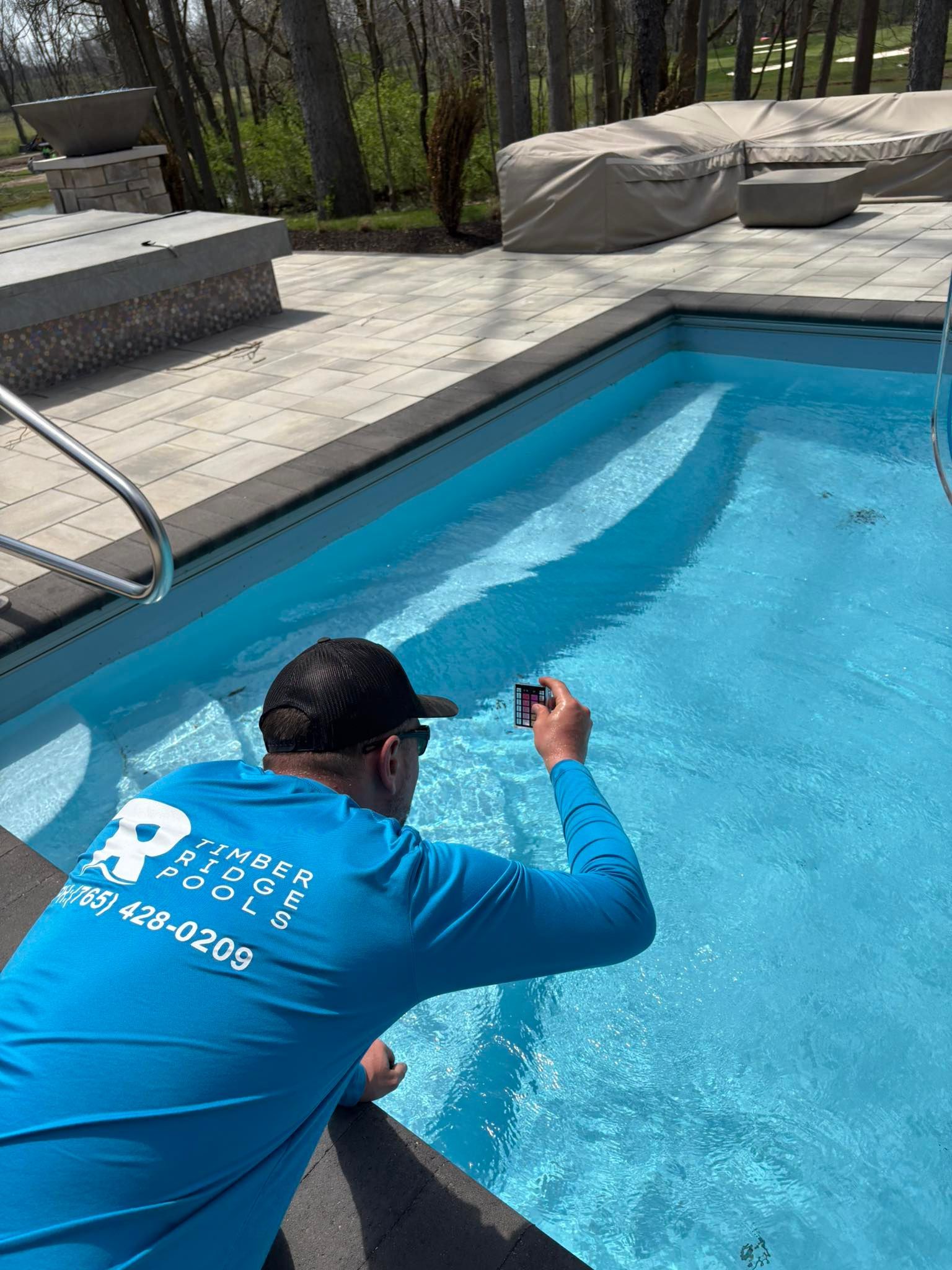
- Test and balance your pool chemistry first (pH 7.2-7.6, alkalinity 80-120 ppm, etc.) — clarifiers work best in properly balanced water.
- Shake the bottle well and add the recommended dose based on your pool size (usually poured directly into the water with the pump running).
- Run your filter 24/7 for at least 48 hours.
- Clean or backwash the filter as it traps more debris.
- Avoid adding clarifier weekly as routine maintenance — it's for when water is visibly cloudy.
Results can often be seen in 1-3 days, with full clarity in up to a week for stubborn cases.
Benefits of Using a Clarifier
- Restores sparkle without harsh chemicals or draining.
- Improves filtration efficiency.
- Helps prevent recurring cloudiness by removing buildup.
- Safe for most pool types (vinyl liner, fiberglass, concrete) when used as directed.
Final Thoughts
Pool clarifiers are a straightforward, science-backed solution for one of summer's biggest frustrations: cloudy water. By leveraging simple electrostatic attraction and polymer chemistry, they turn microscopic troublemakers into filter-friendly clumps, letting your system do the heavy lifting.
If your pool stays hazy despite good maintenance, give a quality clarifier a try — it's often the missing piece for that postcard-perfect swim. Have questions about your specific setup or water test results? Feel free to share more details!